From Sugarcane to Spirit
Sugarcane: The Lifeblood of the Grogue Industry
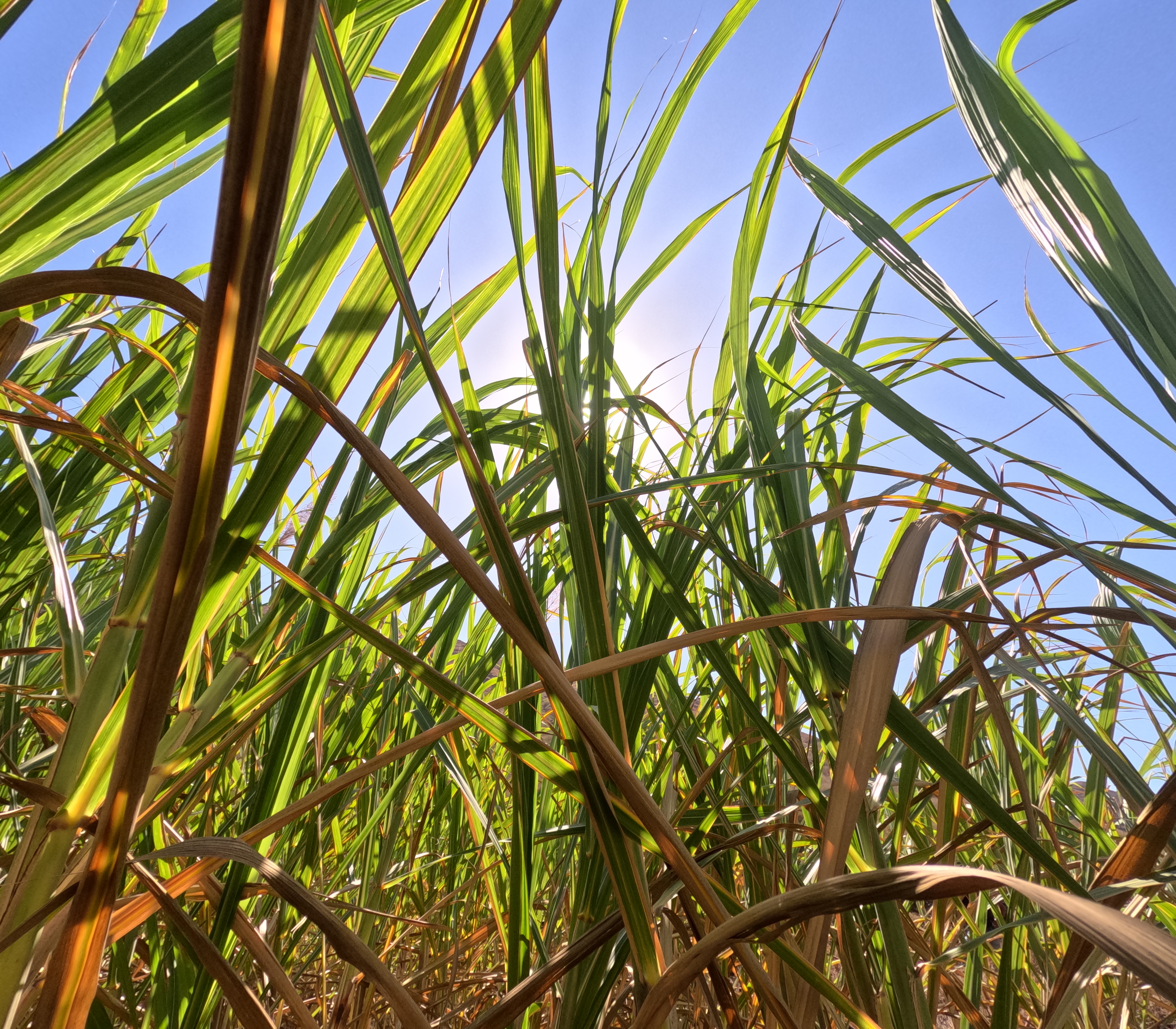
Sugarcane is the lifeblood of grogue production. It provides the essential fermentable sugars, influences the taste, holds cultural significance, and supports the local economy. Without sugarcane, grogue wouldn’t exist and Cabo Verde would lose a vital piece of its cultural identity.
Pressing and Fermenting
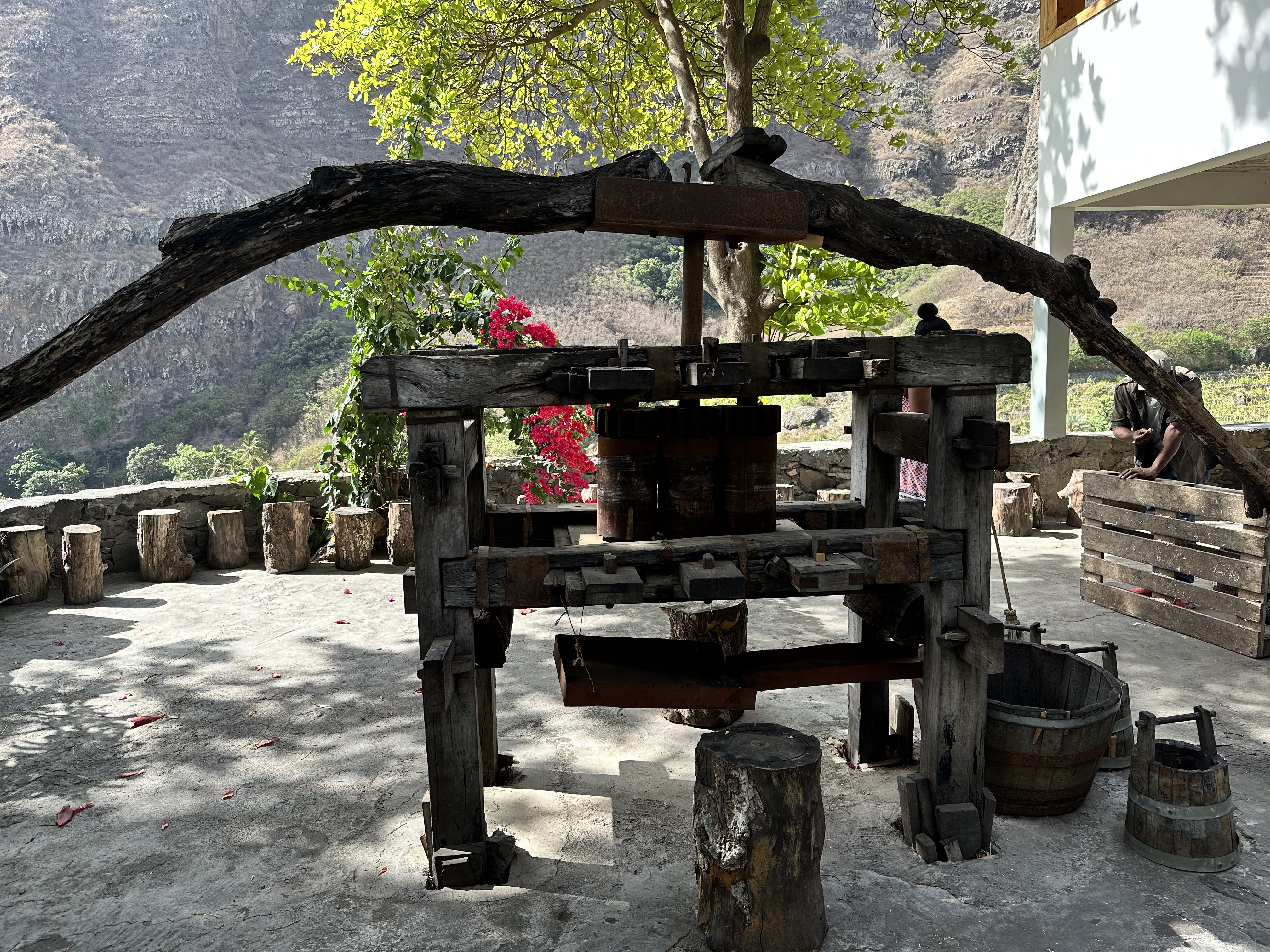
Grogue production begins with towering stalks of sugarcane. These are harvested and fed into a pressing machine, known as a trapiche. Traditionally powered by oxen, this machine extracts the sugary juice from the cane. The resulting liquid, rich in sweetness, is called kalda.
Click here to see a trapiche in action!
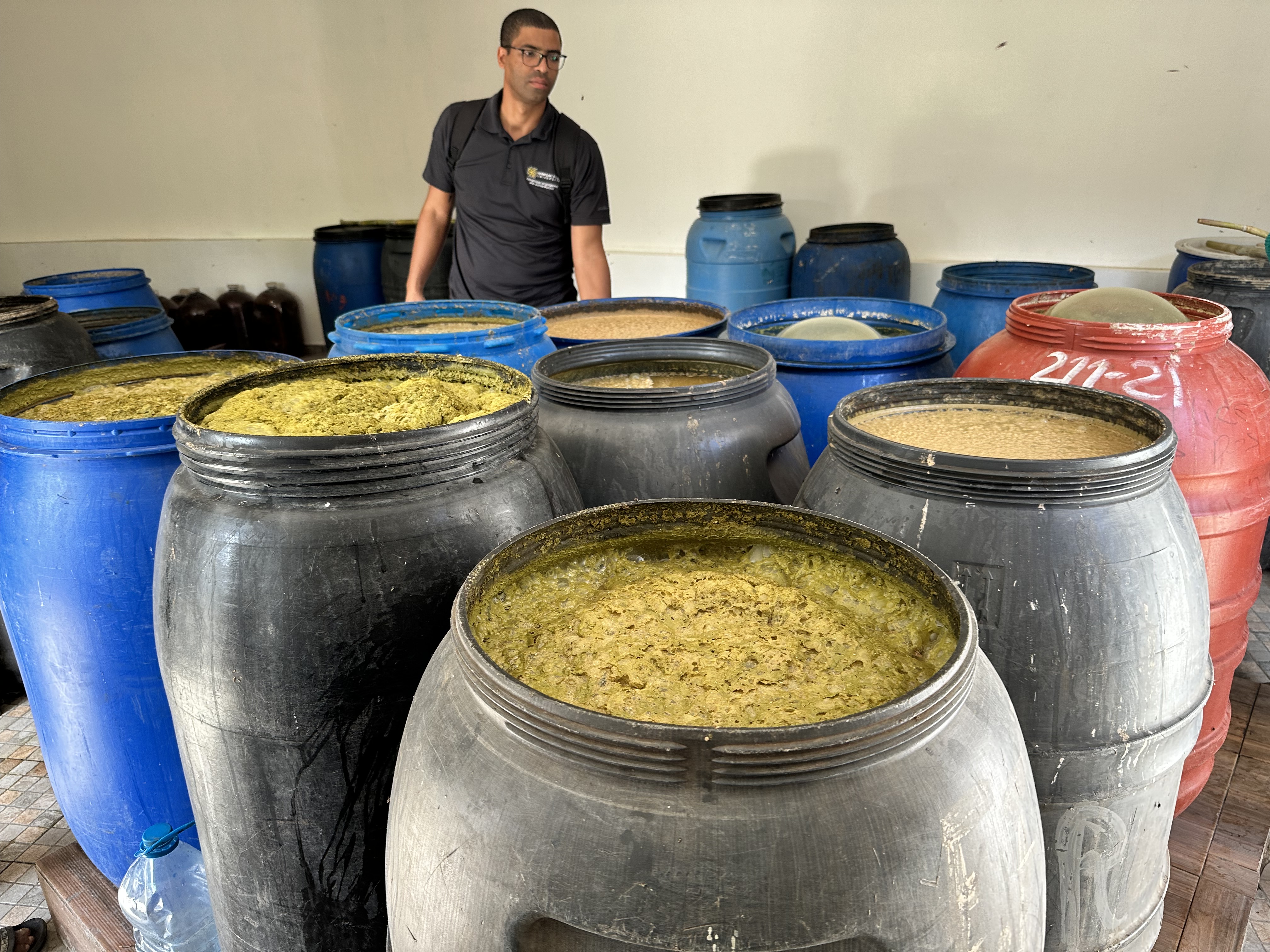
This kalda is then transferred to large bins where it undergoes a crucial transformation. Over a period of 5-14 days, fermentation takes place. During this time, natural yeasts convert the sugars in the kalda into alcohol, setting the stage for the creation of grogue.
Distillation and Condensation
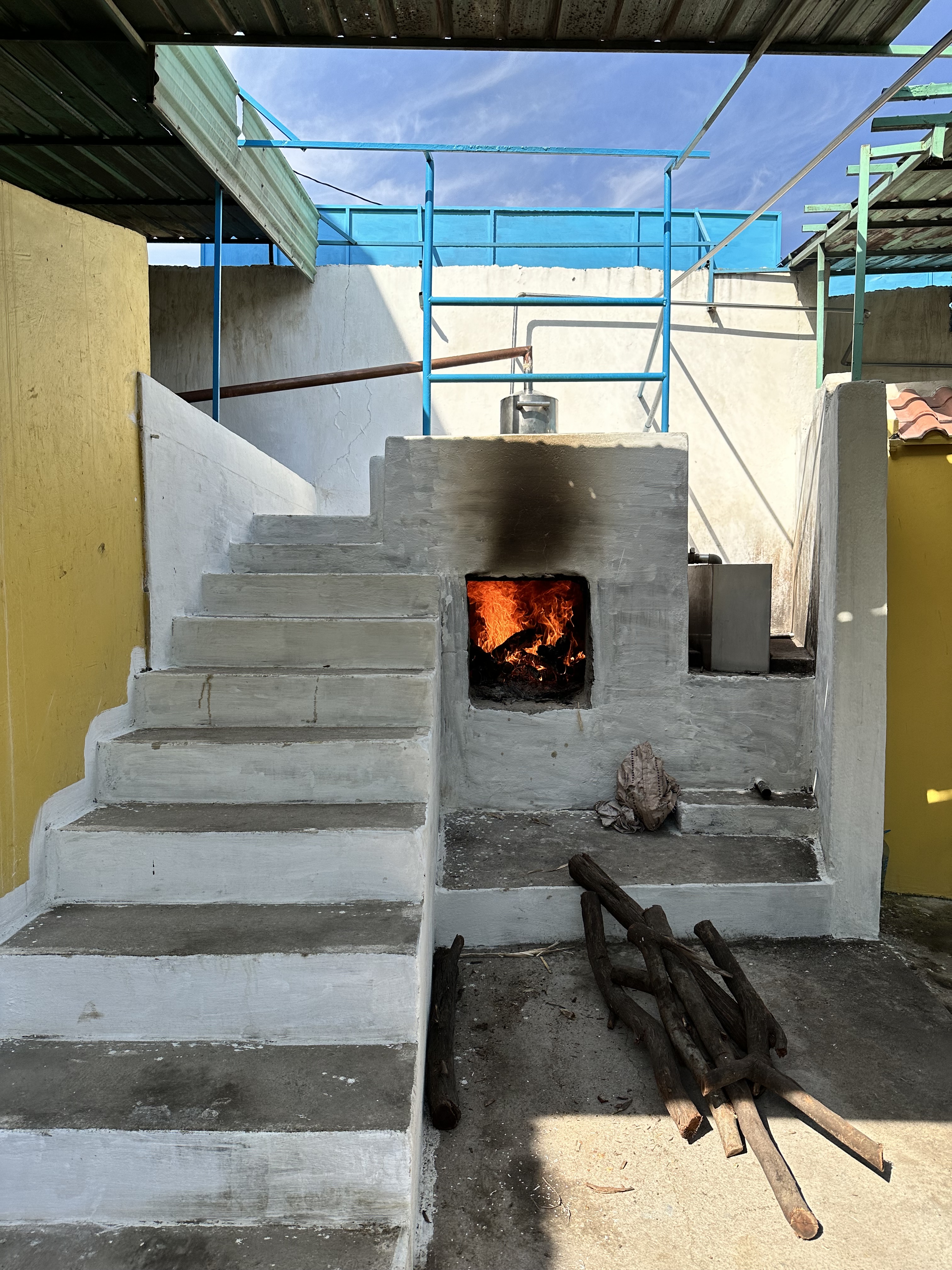
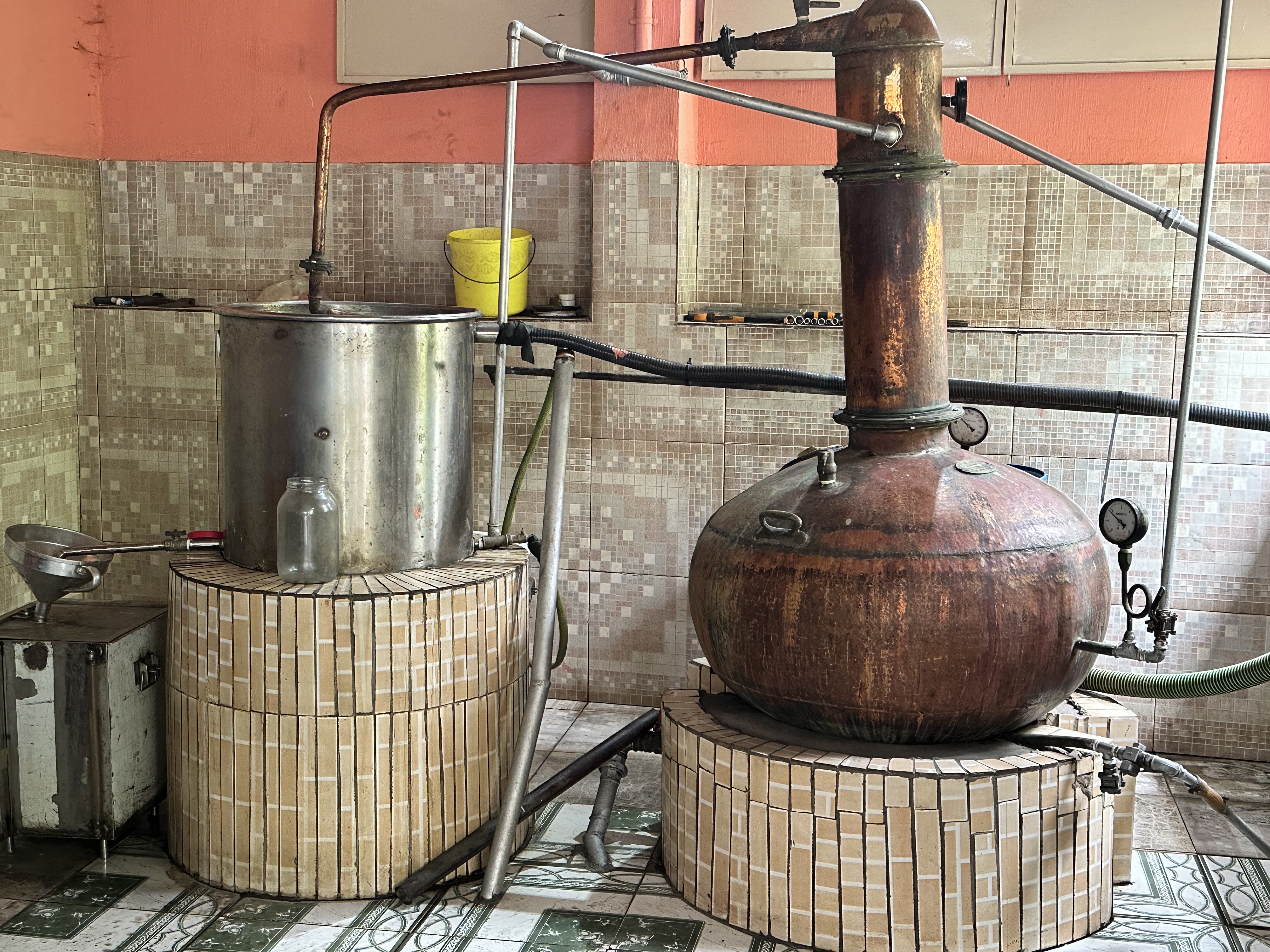
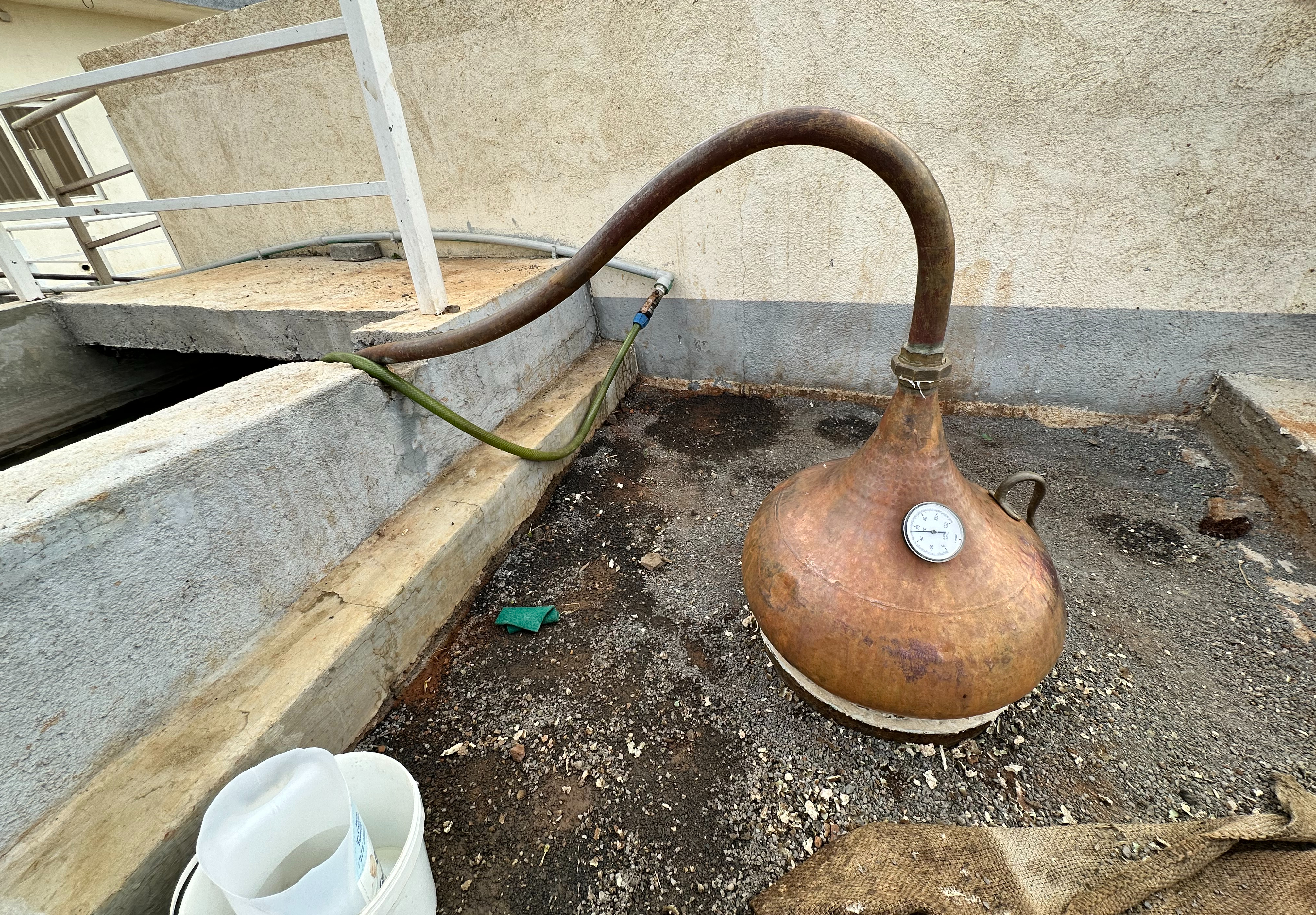
Once fermentation is complete, the kalda is transferred to an alambique (alemibic), an alchemical still used for the distillation of liquids. During the distilling process, the kalda is heated over a fire. This heat is the key. It vaporizes the alcohol present in the kalda, separating it from the heavier components. As the steam travels through the cooling tube, it loses heat and condenses. The condensed liquid slowly flows from the end of the distilling machine producing grogue.


Collection and Bottling
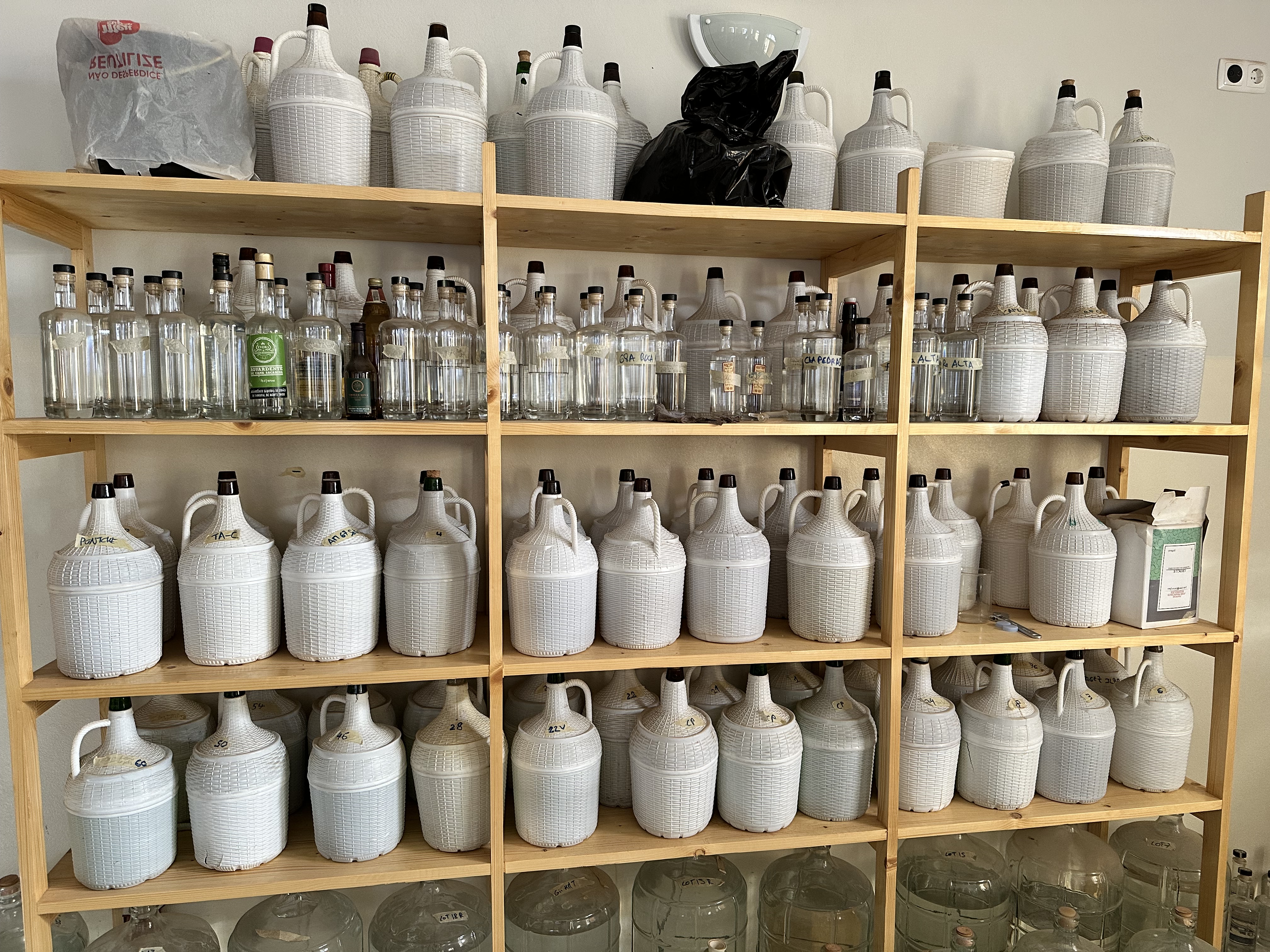
Finally, the grogue is bottled, traditionally in clay pots but more commonly in glass bottles today. These bottles are sealed and labeled for distribution, carrying the fiery spirit of Cabo Verde to homes and celebrations.
A Story of Grogue Production–Grogue Producer Interview, January 7, 2024, Picos, Santiago, Cabo Verde
“As the raw material is sugarcane, the process of making grogue starts from the beginning with the planting of sugarcane. There are many varieties of sugarcane grown in Cabo Verde, selected for its sugar content; size; taste profile; and drought, saltwater, and pest resistance. Sugarcane is perennial and will return year after year if the stalk is cut several inches from the ground. Sometimes in the same hole where we plant the sugarcane, multiple roots and stalks emerge. As it grows, it flowers, and when it flowers, we normally say that the sugarcane is ready to be cut.
Now we have proper devices that we use to measure the sugar (i.e., Brix) and we know exactly when we should cut the plant that we then take to the place where we press it and get the juice. The sugarcane takes only one year to be ready to cut. Normally it can be cut during the whole year, but the sugar content varies. So, the process of making quality grogue starts from the beginning at the cutting and transporting of the sugarcane. First, before we take the sugarcane to the sugarcane press (i.e., trapiche), we must clean it by removing all the buds that can interfere with the quality of the grogue by making it too acidic during the fermentation process…

CONTINUE READING
Then the second part of the process is the pressing of the sugarcane so that you can extract the juice from the cane. You must start the second process of production, that is, the pressing of the sugarcane at a maximum of 48 hours after the cutting before contaminates are introduced that could produce bad grogue containing more methanol. If contaminated sugarcane juice is permitted to ferment, it can start to taste like vinegar and will have low alcohol/ethanol content. The new law states that you must press the sugarcane a maximum of 48 hours after its cut, or it can be confiscated and destroyed.
After the sugarcane is pressed in what we call the trapiche, the machine we use to crush the sugarcane, the juice that is extracted from the cane is taken to another room where it is stored in stainless steel, wood, or plastic food safe barrels. There starts the process of fermentation. Me, the producer of this local unit, I normally add the juice little by little to speed up the process of fermentation because it is biologically explained that when the quantity is low, the yeast, the process goes faster. If you add fresh juice to the remnants of previously fermented juice left in the bottom of the container (about 15%), then, depending on the temperature, it can ferment in 4-6 days, and should never take more than two weeks to reach zero brix.
To finish off the process of fermentation, we must measure the juice to check the sugar and alcohol levels. The sugar is gone, and the alcohol is there, and then we have a device that we call a hydrometer that shows exactly the level of sugar and that it is ready to move to the next step.
Before we start the third stage of the process, which is the distillation, we first wash the still (i.e., alambique) with a mixture of hot water, lemon juice, vinegar, and salt to remove the oxidation from the copper. Then we pour the syrup (i.e., kalda) in the boiler and start the distillation of it.
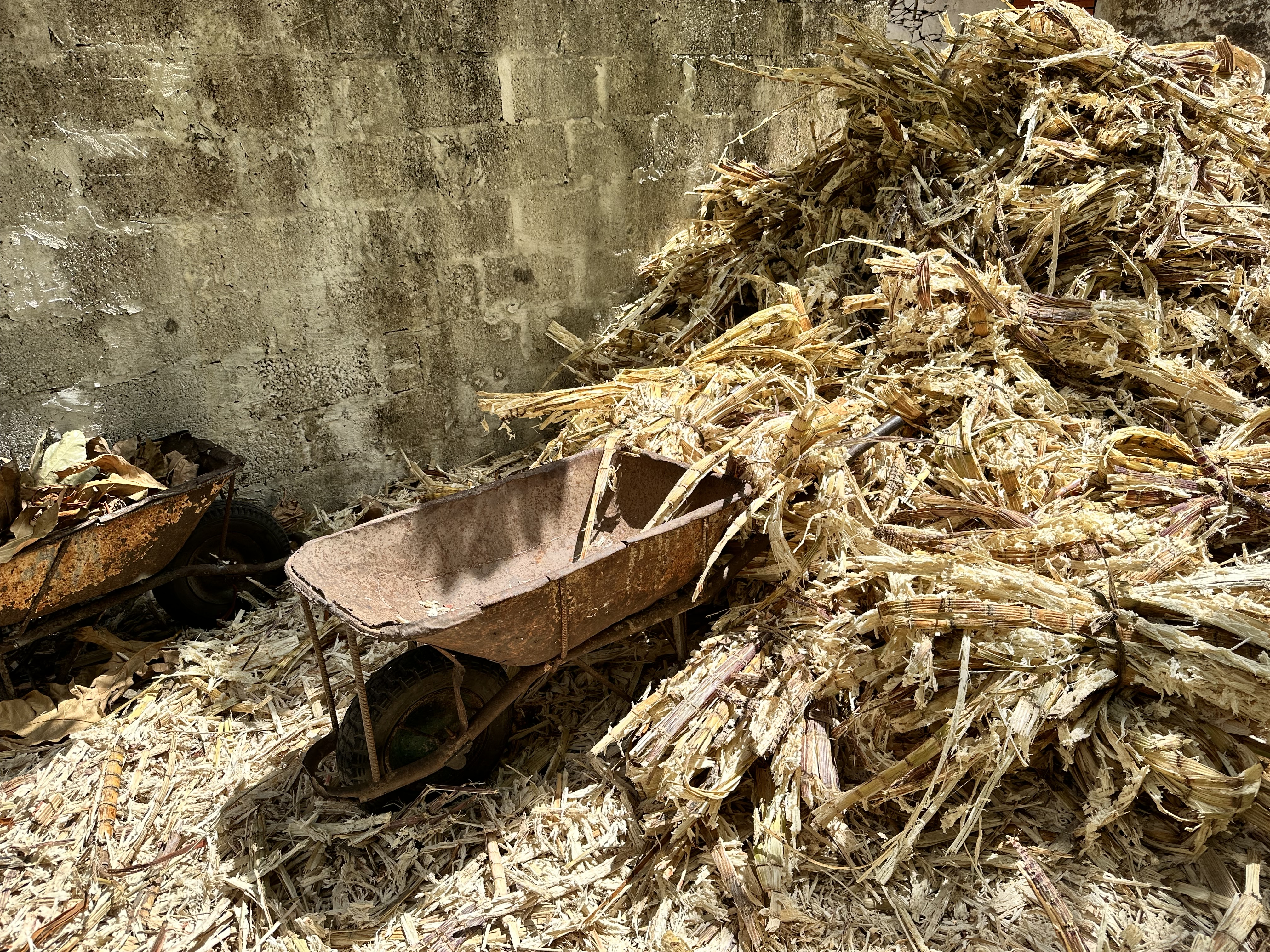
After we pour the juice into the alambique, then we have to light the fire. Normally we use wood or the dried sugarcane stalks (i.e., bagaso) for fuel for that, but we have to control the intensity of the fire since we don’t have a thermometer, so we control it by sight, so we have to go to the bottom of the boiler and check and when it boils and it starts producing steam, we have to lower the intensity of the fire, so sometimes we spray water to lower its intensity.
The grogue that comes out first has greater alcohol content, but also contains other harmful chemicals. Therefore, we remove the first bit called the heads (i.e., kabeça) and discard them (about 5-10%). The grogue that comes out later has lower alcohol content (i.e., kauda/brando), so that is how we know when to stop (about 10-15%), or how we get to the 45% ABV of the hearts (i.e., koração/grogue), which is the goal (about 80% of the distillate). It’s like a bell curve. So, you’ve got the first part that is bad, the heart, and the tail that is also bad. The heart is the part in the middle (i.e., ethanol) that you drink. But it starts at a higher alcohol content and ends at a lower alcohol content. When you notice it’s coming out and the average of what you have reaches 45%, then you just cut it or stop the distillation process. The stuff that comes out later, some say has more flavor, but it also has some bad stuff in it that you can start to smell. More water is coming out, along with other chemicals that evaporate at higher temperatures beyond 78.2°C (173.14°F) at which ethanol evaporates.
I can say that the making of grogue has changed a lot since the old days when my grandparents and my parents used to do the production not with machines that we have today but with the trapiche driven by oxen. And although the old producers took the production of grogue very seriously, they made sure that the grogue was “cana cana,” which means with only sugarcane, not adding anything else to increase the quantity of alcohol so they could have more profits. No, they made sure that it was a really good quality grogue. But the conditions that they had at that time then were not the same as we have today. We could say that hygiene at that time was not the best in terms of the tools that were used to produce grogue. They didn’t remove all the residuals, for example, from the containers where they used to store the syrup for fermentation. But after the regulation on grogue production after 2015, the quality, or the conditions of the places where grogue is produced improved a lot. Now the containers where the cane is fermented are made from stainless steel, not in wood barrels or in plastic drums. The hygiene conditions are better. We have inspections regularly. If we don’t meet the requirements, your production can even be closed. And the new importance of the good quality grogue started having an effect. Now, good quality grogue can be sold for a better price, increasing the income of the producers and encouraging people producing grogue to invest in their infrastructure”
 GRoG: Global Research on Grogue